

Pregnancy brings a magical glow, but hormonal shifts can also introduce unexpected skin surprises, from sudden sensitivity to melasma, often called the "mask of pregnancy". When your usual beauty lineup requires a safety audit, finding a multitasking pregnancy-safe tinted moisturizer becomes your ultimate morning lifesaver. Simplifying your daily regimen shouldn't mean sacrificing your natural radiance or compromising on vital, daily sun protection.
Understanding Pregnancy-Safe Skincare Filters
During pregnancy, your skin absorbs topical ingredients more readily into the bloodstream, making formula choices absolutely crucial. Traditional chemical sunscreens often rely on synthetic filters like oxybenzone, avobenzone, and octinoxate. These chemical agents can penetrate the skin barrier and potentially disrupt delicate hormones.
When building a clean, pregnancy-friendly skincare routine, switching to physical (mineral) UV filters is the gold standard. Mineral filters act like an invisible, soothing shield that sits comfortably on top of the skin rather than absorbing into it.
- Non-Nano Zinc Oxide: The ultimate champion of physical protection. Non-nano zinc oxide reflects UVA and UVB rays away from the skin without penetrating into the bloodstream. It is naturally anti-inflammatory, calms redness, and comes dermatologist-approved for reactive or sensitive complexions.
-
Titanium Dioxide: A gentle, mineral partner that works alongside zinc oxide to provide complete broad-spectrum safety without irritating delicate skin.
Key Benefits of a Tinted Mineral Routine
Upgrading to a mineral SPF base elevated with pure iron oxides offers crucial skin health benefits far beyond simply evening out your skin tone:
| Key Benefit | How It Supports Pregnancy Skin |
|---|---|
| Defense Against Melasma | Pure iron oxide pigments shield vulnerable skin from high-energy visible (HEV) blue light and visible light—the primary triggers for hormonal hyperpigmentation. |
| Deep Hydration ("Hydration Hug") | Formulas rich in hyaluronic acid, squalane, and botanical extracts wrap your skin in a soothing "hydration hug," locking in moisture without clogging pores with heavy oils. |
| Effortless 3-in-1 Multitasking | Consolidating your morning steps into one product—hydrating moisturizer, smooth makeup primer, and broad-spectrum SPF—saves precious time for busy moms-to-be. |
| Barrier Repair | Gentle mineral formulas protect compromised skin barriers caused by fluctuating hormones, keeping irritation and dry patches at bay. |
The Only Brand That Checks Every Box
100% Mineral • Silicone-Free • Infused with Essential Oils • Sustainably Crafted
| Brand | 100% Mineral Portfolio | Silicone-Free | Natural Fragrances | Sustainable Packaging | Non-GMO | Pregnancy / Nursing Safe |
|---|---|---|---|---|---|---|
| Mama Sol | ✓ | ✓ | ✓ | ✓ | ✓ | ✓ |
| EltaMD | ✘ | ✘ | ✘ | ✘ | ✘ | ✘ |
| Coola | ✘ | ✘ | ✓ | ✓ | ✓ | ✘ |
| Supergoop! | ✘ | ✘ | ✓ | ✘ | ✘ | ✘ |
| Dune | ✘ | ✘ | ✘ | ✘ | ✓ | ✘ |
Why this matters for expecting moms: Many top-selling sunscreens blend chemical filters into their mineral lines, rely on dimethicone (silicones) that trap heat and clog hormone-reactive skin, or include synthetic fragrance blends that trigger trimester sensitivities. Mama Sol is engineered to check every safety and clean-formulation box simultaneously.
How to Apply Tinted SPF for Seamless Coverage
Achieving an airbrushed, dewy finish with mineral SPF comes down to effortless technique:
- Prep: Start with clean, slightly damp skin. A nourishing mineral tinted base easily doubles as your morning hydration step.
- Measure: Apply a nickel-sized amount (or follow the two-finger rule) across your face to guarantee full broad-spectrum coverage.
- Blend: Warm the formula between your fingertips before smoothing it gently over your face and neck. The warmth helps mineral pigments melt into the skin seamlessly without leaving a white cast or sticky residue.
Building Your Comprehensive Clean Skincare Routine
Navigating skincare while pregnant or nursing doesn't have to feel overwhelming. By auditing your shelf for clean, gentle alternatives, you can curate a simplified ritual that protects both you and your baby.
Essential Daily Swaps
- Ditch Synthetic Fragrances: Opt for fragrance-free or naturally derived botanical formulas to avoid triggering pregnancy-induced sensory sensitivities or skin flare-ups.
- Gentle Exfoliation: Replace harsh chemical peels with mild enzyme-based exfoliants (like fruit enzymes or lactic acid) to safely slough away dead skin cells and keep your pregnancy glow vibrant.
- Year-Round Sun Defense: Remember that UVA rays pass through window glass, making daily SPF non-negotiable—even when staying indoors or driving.

Adapting Your Glow Postpartum: Navigating the Estrogen Drop
The "pregnancy glow" is fueled by peak estrogen levels, which drop sharply within 24 to 48 hours after delivery. This sudden hormonal shift—combined with sleep deprivation and nursing—frequently leads to a compromised skin barrier, severe dryness, and heightened sensitivity.
- Layer, Don't Strip: Avoid aggressive scrubs or heavy foaming cleansers to fix postpartum dullness. Instead, layer a hydrating, hyaluronic-acid-rich serum directly under your mineral SPF to repair the lipid barrier.
- The "Press, Don't Rub" Technique: Dehydrated postpartum skin can flake under mineral pigments. Instead of rubbing, warm a nickel-sized amount of FACEBRELLA™ between your palms and gently press it into your face and neck.
- Keep Up the Melasma Defense: Estrogen may plummet, but pigment-producing cells remain hyper-reactive for months after giving birth. Continue applying pure iron oxide protection daily to prevent lingering dark spots from locking in permanently.
Complete Your Mineral Sun Care Wardrobe
Building a clean, nourishing skincare wardrobe gives you total peace of mind through every trimester and beyond. Elevate your daily glow with these mineral-rich essentials:
-
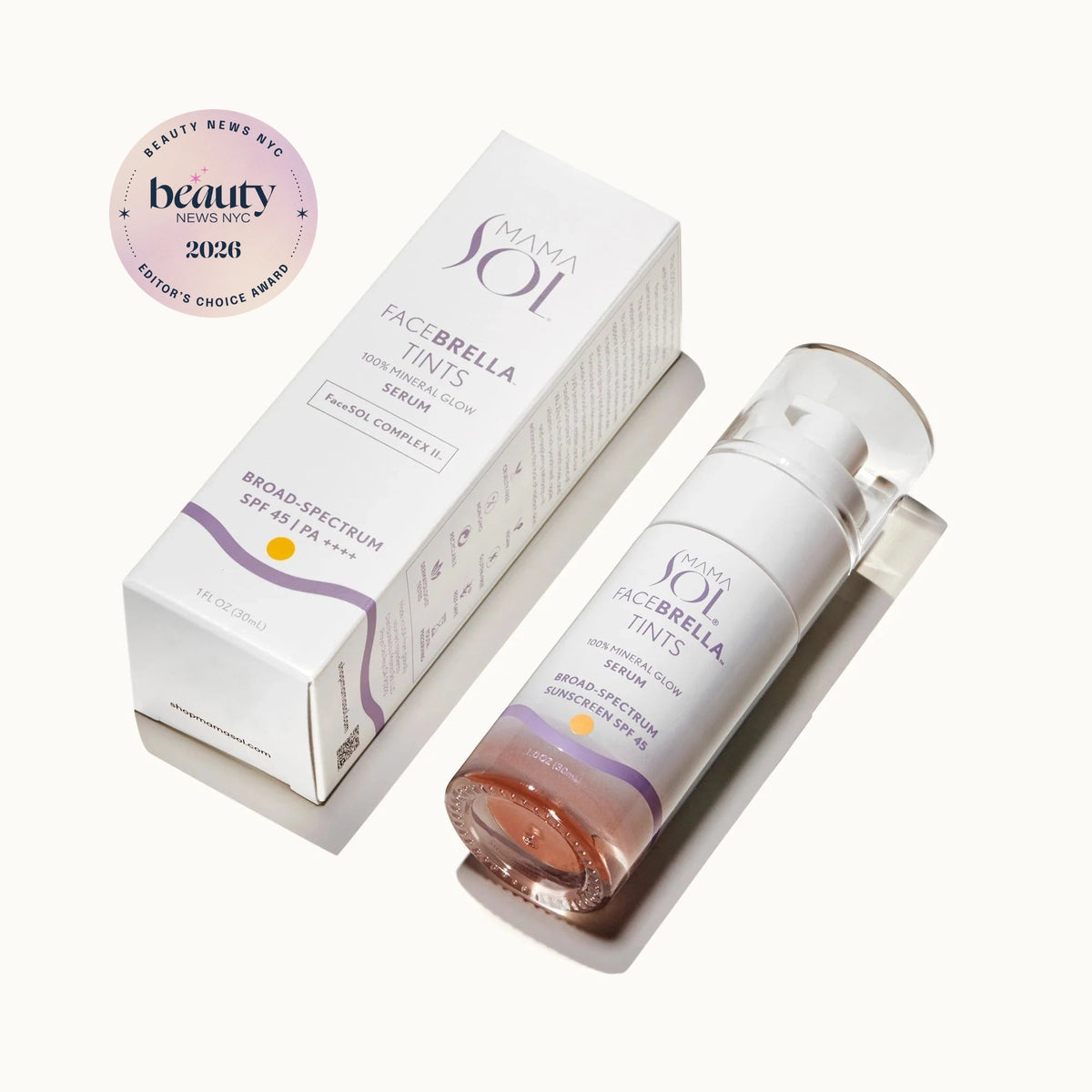
FACEBRELLA™ Tints 100% Mineral Glow Serum SPF 45: A silky tint infused with our proprietary FaceSOL Complex II™ to blur imperfections, deeply hydrate, and deliver a luminous finish.
-
EYEBRELLA™ 100% Mineral Tinted Eye Brightener & Corrector SPF 45: Designed to gently target under-eye dark circles, delivering a refreshed, awake appearance with soothing mineral defense.

-
LIPBRELLA™ 100% Mineral Tinted Lip Oil SPF 20: A cushy lip treatment packed with LipSOL Complex™ that softens, plumps, and protects lips with sheer color and zero stickiness.
Community Q&A: Layering Prescription Skincare with Mineral SPF
Disclaimer: The following guidance is for educational purposes. Always consult your dermatologist or OB-GYN before introducing or layering prescription treatments during pregnancy or postpartum.
Q: "My dermatologist prescribed Azelaic Acid 15% for pregnancy acne and melasma. How do I layer this with my Mama Sol tinted moisturizer without pilling?"
A: Azelaic acid is a wonderful pregnancy-friendly active for calming breakout inflammation and keeping pigment in check. However, its paste-like texture can bead up under daily sunscreen. The secret lies in your application technique: apply your prescription azelaic acid to clean, completely dry skin first. Allow it to sit for 3 to 5 minutes so it fully absorbs before pressing your mineral SPF on top. Taking this brief pause prevents product pilling and creates a smooth base.
Q: "Can I safely pair prescription topical Erythromycin or Clindamycin with non-nano zinc oxide?"
A: Absolutely. Topical antibiotics target acne-causing bacteria at a microscopic level, while physical non-nano zinc oxide sits comfortably on the skin’s surface. In fact, pure zinc oxide acts as a soothing, anti-inflammatory shield that helps calm the temporary dryness or localized redness active prescriptions can sometimes trigger. Apply your liquid or gel prescription treatment first, let it dry completely, and finish by pressing on your tinted mineral moisturizer to seal in hydration and protect your skin barrier.
Prioritizing Clean Beauty Throughout Your Journey
By prioritizing non-toxic physical blockers, mineral pigments, and rich botanical antioxidants, your daily beauty routine can remain safe, simple, and beautifully radiant through pregnancy, postpartum, and beyond.
Simplify your daily glow throughout pregnancy and beyond with Mama Sol's 100% mineral collection—including our FACEBRELLA™ Tints 100% Mineral Glow Serum SPF 45 and LIPBRELLA™ 100% Mineral Tinted Lip Oil SPF 20. Experience effortless, safe, and hydrating sun protection designed by mamas, for mamas. Visit Mama Sol today to discover your new clean skincare essential!
Looking for more clean beauty guidance? Explore our guides on creating a complete pregnancy-safe skincare routine or discovering the best fall skincare essentials for transitioning seasons! What’s your favorite way to simplify your morning glow? Let us know in the comments below!