First things first: Sunscreen’s an everyday essential for everyone, even when it’s cloudy outside. We’re lucky to live in the golden age of self-tanners, bronzer, and professional spray tans, so there’s no need to subject your skin to the sun’s rays in pursuit of that I-just-got-back-from-Hawaii glow. Flashback to Mom or Grandma telling you how they used to lie out for hours, slathered only in baby oil—can you even imagine?
When you’re outside or exposed to the sun, your skin is vulnerable to the sun’s radiation. UV light is invisible to humans, but UVA and UVB rays can damage your skin cells and lead to skin cancer. And no one wants to look like an overcooked lobster.
Transitioning your routine? Check out our Fall Skincare Essentials to keep your skin hydrated as the weather cools.
The Skin Cancer Foundation has a great breakdown of all the sunscreen basics. But Googling “Best mineral sunscreen face” is going to bring up tons of skin protection options and that can get confusing real fast.
There are two types of sunscreen: mineral sunscreen and chemical sunscreen. Chemical sunscreens penetrate skin and work by absorbing UV (ultraviolet) rays like a sponge. Chemical UV filter ingredients include oxybenzone, avobenzone, and octinoxate. Many chemical sunscreens contain active ingredients that can be irritating for those with sensitive or acne-prone skin.
Mineral sunscreens, also known as physical sunscreens, use active mineral ingredients like Zinc Oxide to create a protective shield on the surface of your skin. Unlike chemical sunscreens that absorb into your bloodstream, mineral options reflect UV rays away like a mirror. To dive deeper into this science, check out our breakdown on mineral vs. chemical sunscreens and why your skin will love the mineral touch.
Since they’re not absorbed into the skin, mineral sunscreens are less likely to cause irritation. Fun fact: Zinc oxide’s often used in diaper rash cream for this reason. You’ll also find hybrid sunscreens that combine active ingredients found in both mineral and chemical sunscreens like zinc oxide and octinoxate.
When it comes to finding the best mineral sunscreen for face, check the SPF rating. SPF stands for Sun Protection Factor, which tells you how long the sun’s UV rays will take to cause sunburn and redden your skin when you’re using sunscreen perfectly (exactly as directed, which is more rare than you think) versus how long it’ll take to burn without sunscreen. The higher the SPF, the higher the protection.
For example, if you apply SPF 30 sunscreen, it’ll theoretically take 30 times longer for your skin to start burning than if you went without it. But since no sunscreen can really stay effective longer than two hours, you need to reapply frequently, especially when sweating or swimming. You want your sunscreen to have SPF 30 or higher.
Let’s break down the difference between UVA (ultraviolet A) and UVB (ultraviolet B) rays. UVA (aging) rays penetrate more deeply into the skin and cause skin damage over time that leads to skin tanning, skin aging, and premature wrinkles. UVB (burning) rays are what come to mind when we think of sun damage, causing skin reddening and sunburn. Both UVA and UVB rays can damage the skin’s DNA, leading to genetic mutations and skin cancer.
Next, ensure that your sunscreen has broad-spectrum protection, which means that it can protect you from both UVA and UVB rays. A sunscreen’s SPF number mainly refers to how much UVB ray protection it provides; broad-spectrum protection ensures that the UVA protection is proportional to the UVB protection.
Check your sunscreen’s ingredient list for formulations best for sensitive and acne-prone skin. Remember, the higher the item appears in the list, the more of it the formula contains. It’s suggested that mineral sunscreens are better for sensitive and acne-prone skin due to gentler active ingredients that aren’t absorbed into the skin. Zinc oxide and titanium dioxide are noncomedogenic and won’t clog pores; they’re also known to be good for those with sunscreen allergies.
If you’ve got sensitive or acne-prone skin, keep an eye out for “noncomedogenic” and “won’t clog pores” on your sunscreen label. Avoid ingredients commonly found in waterproof sunscreens like avobenzone, oxybenzone, octinoxate, benzophenone, para-aminobenzoic acid (PABA), and methoxycinnamate, which are more likely to cause stinging, redness, and irritation.
Mineral oil, silicones, cocoa butter, and beeswax can also trigger breakouts, but it’s best to look for non-comedogenic rather than oil-free sunscreens.
Experts generally agree that mineral sunscreen is best for sensitive skin because of gentler active ingredients; however, it really comes down to your specific skin type and triggers. Antioxidants like vitamin E and anti-inflammatory, hydrating ingredients are something to look for based on your preferences and skin’s needs. Many sunscreens contain fragrances, preservatives, paragons, and dyes that sensitive skin can’t tolerate.
Lotions, creams, and gels are also easier to rub into the skin, which can reduce a friction reaction and also give you more coverage than a spray sunscreen. If you’re worried about mineral sunscreen leaving a white cast, these kinds of formulations can be more moisturizing and easier to blend into skin. Tinted mineral sunscreens are also an option, along with different finishes like matte or glow.
Here are six expert-recommended and Mama Sol personal favorites when it comes to the best mineral sunscreens for face and best mineral sunscreens for sensitive and acne-prone skin:
Elta MD UV Physical is a lightly tinted, non-comedogenic 100% mineral sunscreen that’s especially great for oily, acne-prone, and mature skin. It evens out skin tone with a matte finish and protects against UV rays with a blend of zinc oxide and titanium dioxide. Wear this fragrance-free tinted mineral sunscreen alone or under makeup. Water resistant for up to 40 minutes.
Developed for sensitive skin, La Roche Posay Anthelios SPF 50 is a 100% mineral, broad-spectrum tinted face sunscreen with titanium dioxide and antioxidants. It blends quickly into skin for a tinted matte finish, which is great in combination with your favorite daily moisturizer.
Cetaphil’s lightweight, 100% mineral sunscreen for sensitive skin is gentle on your face and body, making it ideal for daily use. Broad-spectrum protection combines sheer zinc oxide and titanium dioxide with soothing vitamin E and probiotics to help protect skin. Water resistant for up to 80 minutes.
This bestselling MD Solar Science 100% mineral sunscreen blends easily into all skin tones for a matte, filter-like finish. Antioxidants like vitamin C, green tea, cranberry fruit, and pomegranate extracts protect skin from free radicals and sun. Wear it solo or under makeup as a primer.
We love that Cocokind’s female founder and CEO, Priscilla Tsai, is also a mama! This is a fragrance-free mineral sunscreen that uses non-nano zinc oxide, blue phytoplankton, and microalgae to protect skin against the sun’s rays as well as daily stressors like pollution. It’s dermatologist-tested and gentle on sensitive skin.
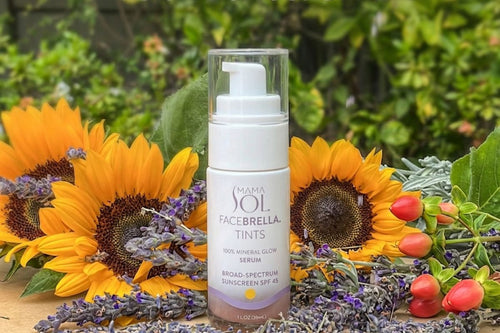
Don’t mind us as we enter the chat for “best mineral sunscreen for face.” Mama Sol’s labor of love is a 100% mineral daily sunscreen that combines a smoothing skin primer, moisturizer, and physical sunscreen for a 3-in-1 multitasker. Our silky, lightweight cream goes on white so you can see exactly where you’ve applied it, then blends seamlessly into skin in seconds.
Mama Sol's non-nano zinc oxide shields skin indoors and outdoors, from UVA/UVB rays and IR (infrared radiation) to HEV (blue light) from phones and devices. Hyaluronic acid, moringa seed extract, squalene, and sacha inchi seed extract help nourish, condition, and soften the look of skin; our proprietary youth-preserving complex helps minimize and smooth the appearance of fine lines and wrinkles.
Mama Sol sunscreen is designed to be safe and nourishing for sensitive skin, pregnant moms, and nursing parents. It’s free of all the ingredients you want to avoid while expecting. Its subtle, natural lavender scent is an instant mood boost every time you use it. Mini spa moment of zen, anyone?
FACEBRELLA™ 100% Mineral Moisturizing Sunscreen SPF 30
$00.00$48.00
Why it’s a top pick for your face:
Broad-Spectrum Protection: This formula acts as a "shield," defending your skin against UVA (aging), UVB (burning), and even Blue Light from your digital devices.
Non-Nano Zinc Oxide: We use larger mineral particles that sit safely on the surface of your skin rather than being absorbed into your bloodstream—the gold standard for pregnancy-safe care.
3-in-1 Multitasker: It’s a hydration hug that functions as your daily moisturizer, a smoothing makeup primer, and your SPF 30 protection all in one step.
Zero White Cast: Engineered to blend into all skin tones, ensuring you get the mineral protection you need without the "ghostly" residue.
Will Mineral Sunscreen Leave a White Cast?
We're anti-ghosting here! The best mineral sunscreen for face formulas now use micronized or tinted zinc oxide to blend seamlessly. For a flawless finish, warm a nickel-sized amount between your fingertips before pressing into your skin.
Ready to choose the best mineral sunscreen for your face?
Now that you’ve explored some of the best mineral sunscreens for face, find the one that fits your skin type and lifestyle.
Finding the best Christmas gifts for a mother-in-law can feel like balancing a delicate equation. You want to present her with something meaningful, luxurious, and...
Pregnancy brings a magical glow, but hormonal shifts can also introduce unexpected skin surprises, from sudden sensitivity to melasma, often called the "mask of pregnancy". When your usual beauty lineup requires a safety audit, finding a multitasking pregnancy-safe tinted moisturizer becomes your ultimate morning lifesaver. Simplifying your daily regimen shouldn't mean sacrificing your natural radiance or compromising on vital, daily sun protection.
Pregnancy brings a whirlwind of changes—from morning sickness to that coveted glow. But with your growing bump comes growing concerns about product safety, especially when it comes to sun protection. If you're wondering what sunscreen is safe for pregnancy, you're not alone. Many expecting mamas find themselves scrutinizing ingredient lists and questioning everything in their beauty routine.